How to start a container garden
Growing plants in pots
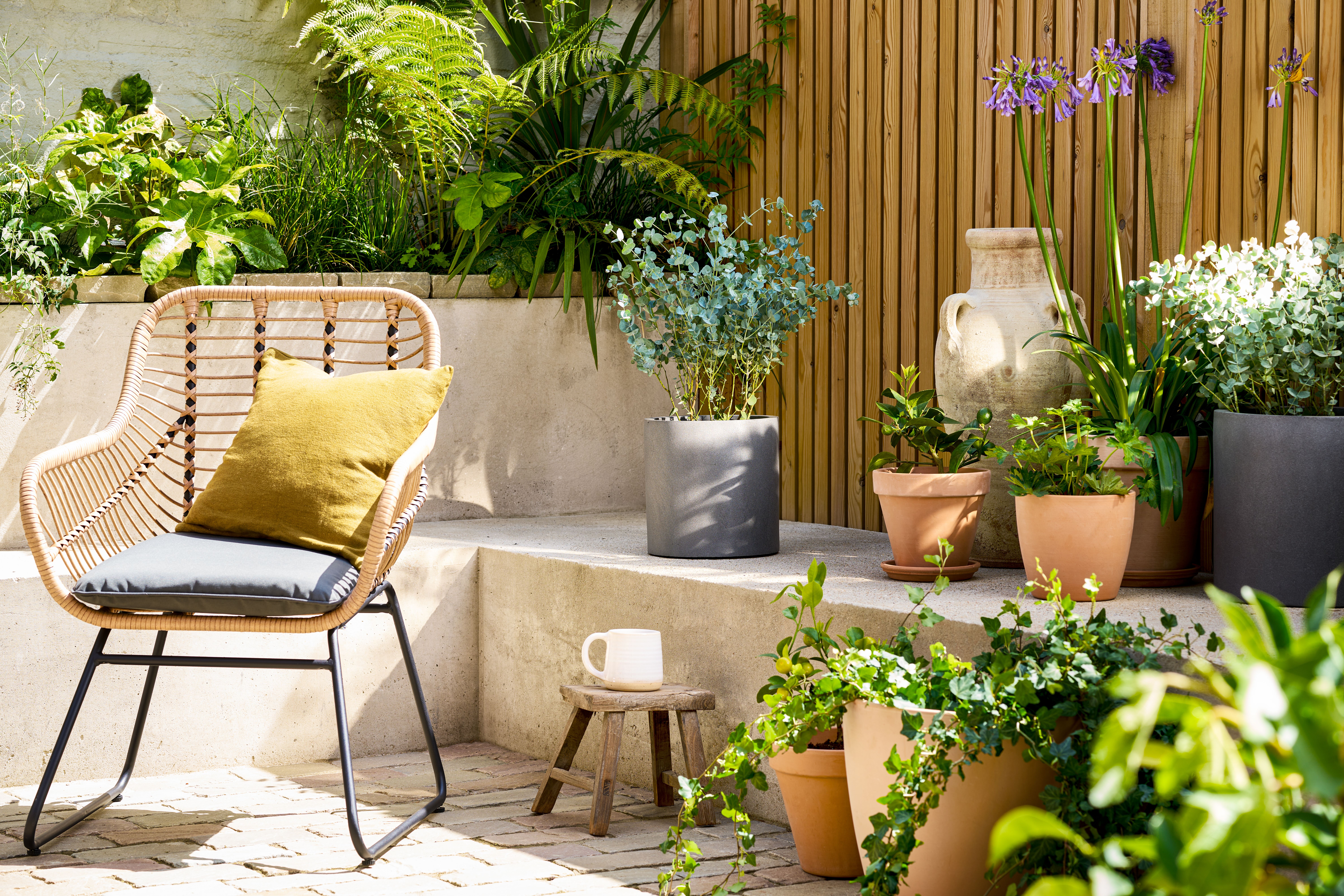
Working with a bijou balcony, petite patio or teeny terrace? Container gardening lets you exercise your green thumb in even the smallest of outdoor spaces – no sprawling lawn necessary. This method of growing in pots, planters or hanging baskets is great for outside areas where digging isn’t possible, offering a versatile, space-efficient way to breathe a little green energy into your patch. It’s a great option for outside spaces without borders or bedding, or for rental accommodation where big changes aren’t always permitted. Plus, it means you can get creative with colour, shape and texture, in a flexible display that changes with the seasons. Let’s dig into it (figuratively, of course).
Care tips for container gardening
Plants that are in the ground have space for their roots to grow, a natural supply of nutrients and deep, porous soil that will soak up any water. Plants in pots, on the other hand, are limited by the size of their container, which means space is in short supply, nutrients will lessen overtime and there’s a risk of root rot without proper drainage. To make sure your plants thrive, there are four simple care tips you should follow when establishing and maintaining your container garden.
1. Make sure your plants have good drainage
Always make sure the decorative pot has a hole in the bottom (even if you’re keeping your plant in its nursery pot) so that water can drain away. This is key, as plants that don’t have good drainage could become waterlogged and develop root rot. You can even add broken crockery to the base of your pot, which will soak up any excess water, or vermiculite (a lightweight mineral) to your potting mix to help support drainage.
2. Use the correct soil
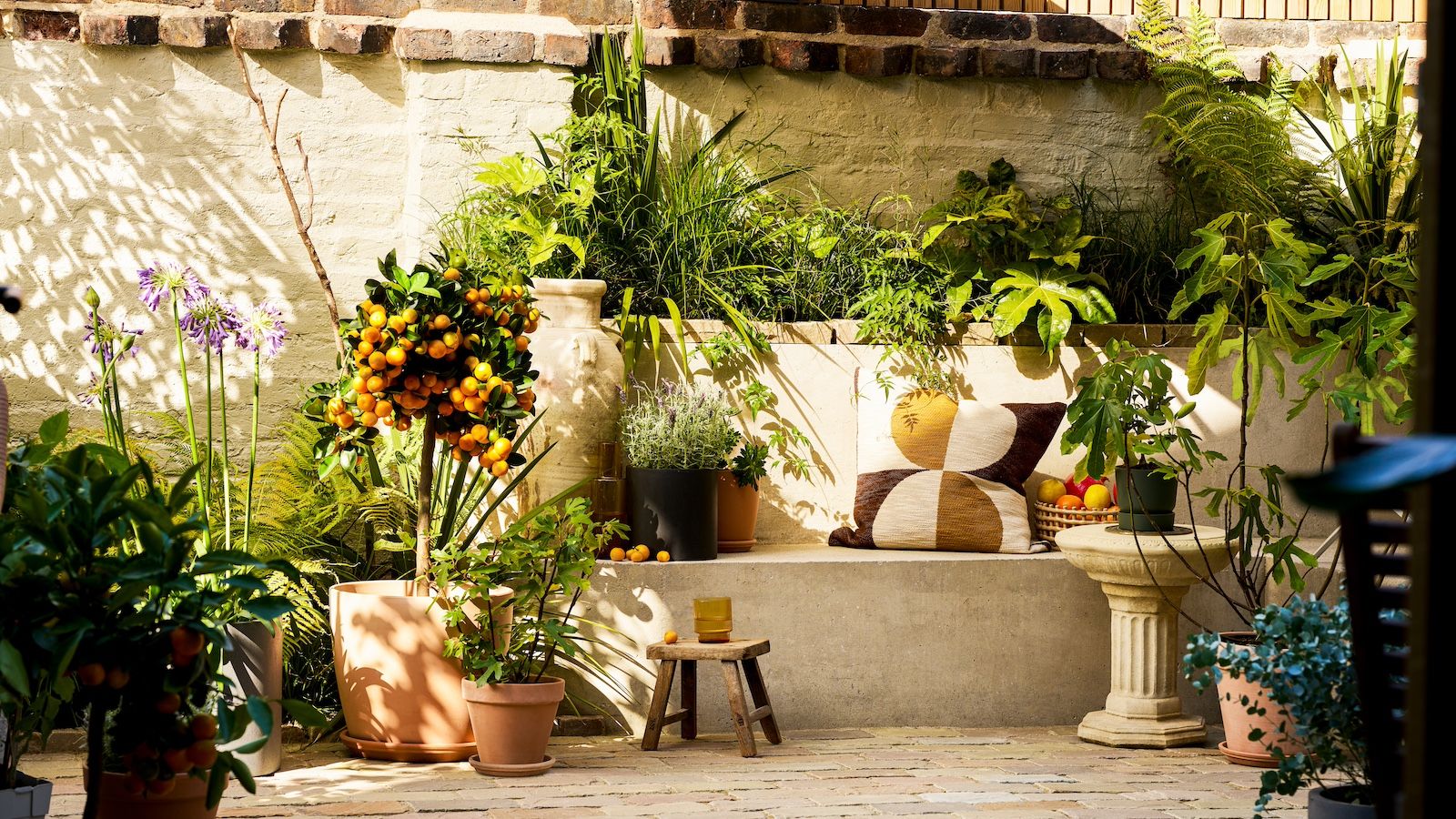
Not all soil was created equal. Different plants will prefer different types depending on their needs, so bear this in mind when planting up. Plants like olive trees and citrus trees need soil that is free-draining and more tolerable of the drought conditions you’d get in the Mediterranean – something that is made with a blend of clay, grit and sand, for example. This is much denser than the softer multi-purpose compost, which is best suited to more herbaceous, non-Mediterranean plants, like fatsias or bay laurel trees. Other plants like acers and camellias prefer ericaceous soil, which is a similar texture to multi-purpose but has extra acidic materials like bark and fir needles, giving it a different pH level. If you're repotting, make sure to use the right compost for your plant to keep it happy and healthy.
3. Water your plants regularly
It can be tempting to sit back and let the weather take care of watering for you, but your plants will still want you to give them a drink, especially those that are living in pots. Even in winter, you'll need to keep an eye on your plant’s soil and water them if they're looking parched. This is particularly important for balcony plants, which tend to be sheltered from above and so miss out on essential rainfall. How often you'll need to water them will really depend on your plants. Olive trees and Canary Island date palms, for example, prefer their soil on the drier side and will be happy to dry out completely between drinks, whereas a tree fern likes regular watering. In the summer, all of your plants will need much more as the days are hotter – we recommend watering in the morning or evening, so your plant can soak up as much of the good stuff before the sun gets to it.
4. Remember to repot
Your plant’s roots and nutrients are all restricted to one pot and, when it’s on a mission to grow, it can start to get pretty cramped in there! You can tell if your plant is in need of a new pot because there will be lots of roots poking out of the bottom or, if you remove your plant from the pot, roots circling around the edge of the pot on the hunt for more space. Even if your plant hasn't outgrown its pot, we recommend repotting them every 2-3 years to refresh the nutrients in the soil. Read our complete guide to repotting for more tips. In between repotting, you can give your plants a helping hand by feeding them with liquid fertiliser very two weeks during growing season (spring and summer).
Styling a container garden
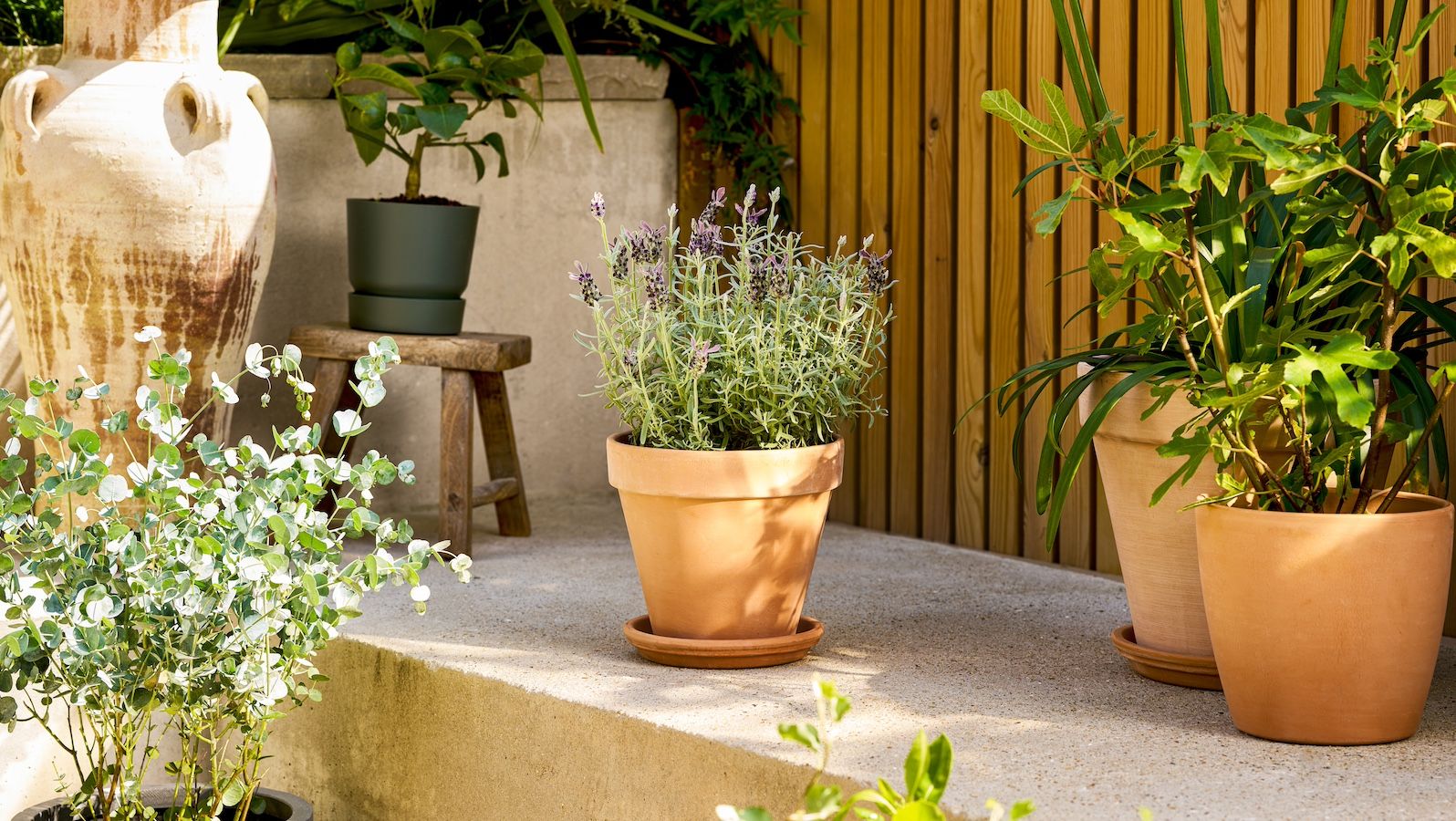
Now we’ve covered the practical steps, it’s time to get onto the pretty ones. Growing a container garden gives you lots of flexibility to get creative, bringing in additional textures, heights and structures to create a visually interesting space, no matter the size. Here are a few ways to bring your container garden to life.
1. Choose a style
Do you dream of a Mediterranean escape, fantasise about a tropical jungle, or does homegrown beauty hold your heart? Choosing plants that hail from the same habitat will not only make caring for them a little easier, but it will create a seamless, cohesive look. Think olive and lemon trees for Med vibes, flowing ferns and bamboo for a jungle aesthetic, or quaint apple trees and English lavender for pure cottagecore. Of course, there’s no need to stick to one look if you don’t want to. If your favourite style is every style, feel free to mix it up!
2. Mix shapes and sizes
Layering is all about contrast, and size and shape are easy ways to achieve this. Pairing a tall, linear bamboo with a squat fatsia, for example, or a lollipop bay tree with a shorter hydrangea, will add depth and dimension to your outside space, creating visual interest and inserting greenery at every eye level. Another way to achieve contrast is to place your plants at different heights. Pop a little lemon tree on a table or step, or trail a climbing plant up a trellis to create a living wall.
3. Pair different textures
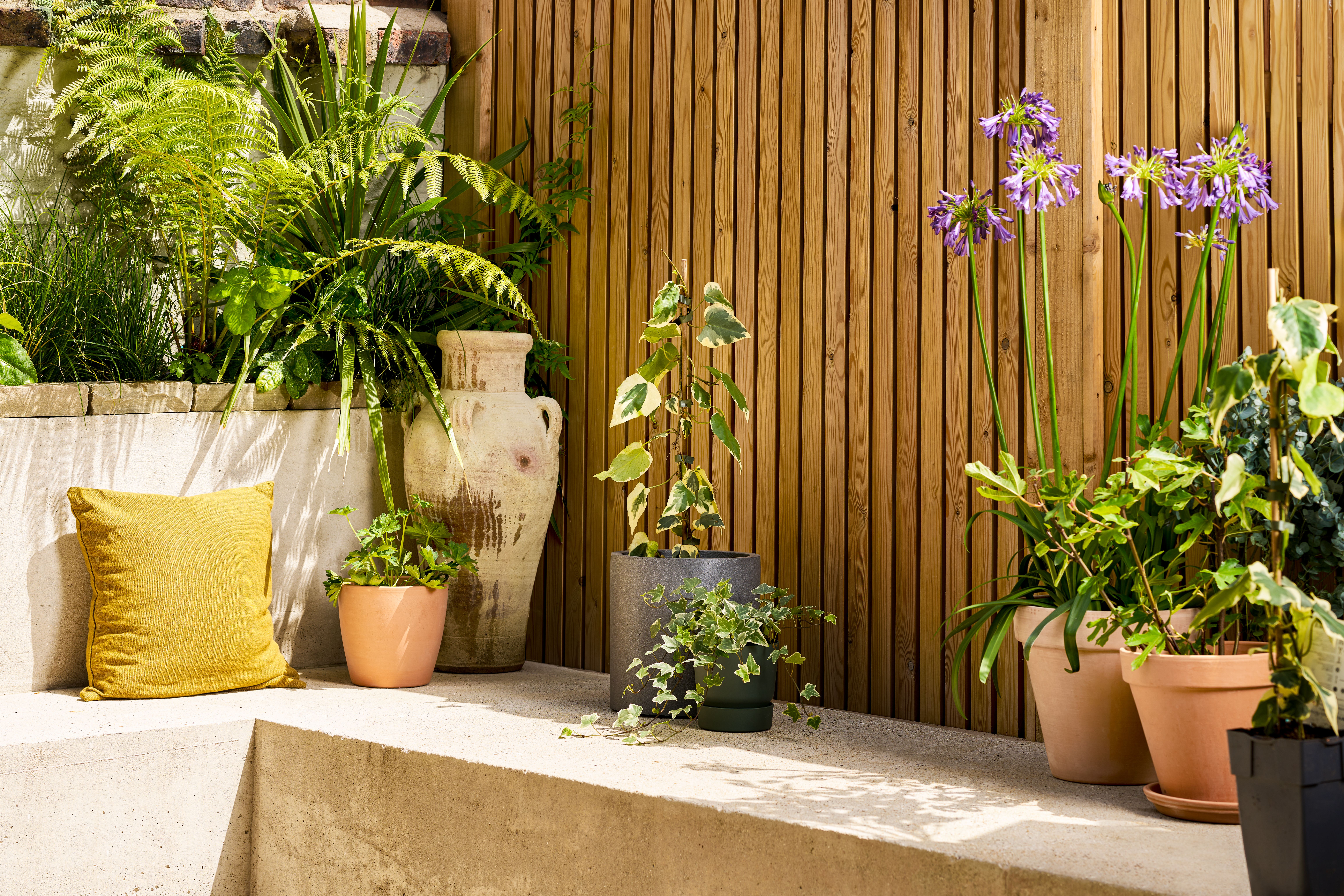
The beauty of planting in pots is it gives you a whole new way to express yourself. Whether opting for classic terracotta for a traditional aesthetic, sleek concrete styles for a modern design or bright shades for a pop of colour, pots act as an extension of your style, bringing your desired look together. For added interest, we’d recommend mixing your textures. Pair faux rattan with earthy terracotta or smooth fibrestone with a ribbed ceramic to create a pleasing contrast.
4. Soften sharp corners
If your patio or balcony is all straight lines and sharp edges, the curve of a plant pot will help soften it up. Group your pots together to turn the border of your space into an undulating wave, bringing flow and dimension to an otherwise angular area, or stagger pots up outdoor stairs or along a walkway to add a sense of movement and direction.
5. Elevate practical areas
Plants not only add shape, colour and interest to outside spaces, but they can also be useful tools for elevating (or even disguising) more practical parts of the garden. Using a group of pots, you can frame a doorway, add style to an outdoor bench, or even create the illusion of ‘rooms’ by using pots to divide one side of the space from the other. They can also be handy for screening off worn-out fences (particularly helpful in rented homes where you can’t make big changes) or for adding privacy to balconies.
The beauty of a container garden is your plants can be easily moved around to make them work for you in the spaces you need them most, creating flexible displays that add greenery, flow and joy. Ready? Get growing.
Start a container garden


Rewild your inbox
Plant tips. Special offers. No spam.
You might like
Plants for every outdoor space
From balconies to patios
How to bring the outside in
Bring on the plants
Five ideas to borrow from the RHS Chelsea Flower Show 2025
Gardening gloves at the ready